Physician Perspectives
Just two weeks after the clinical anatomists came to Rochester, I found myself on the other side of the Atlantic for another gathering I won't soon forget: the 106th Annual Meeting of the British Association of Dermatologists, held June 30 through July 2 at Manchester Central in Manchester, England. It was my first time presenting at a British meeting, and the trip delivered everything I hoped for: new colleagues, new ideas, and a firsthand look at how dermatology is practiced under a very different healthcare system.
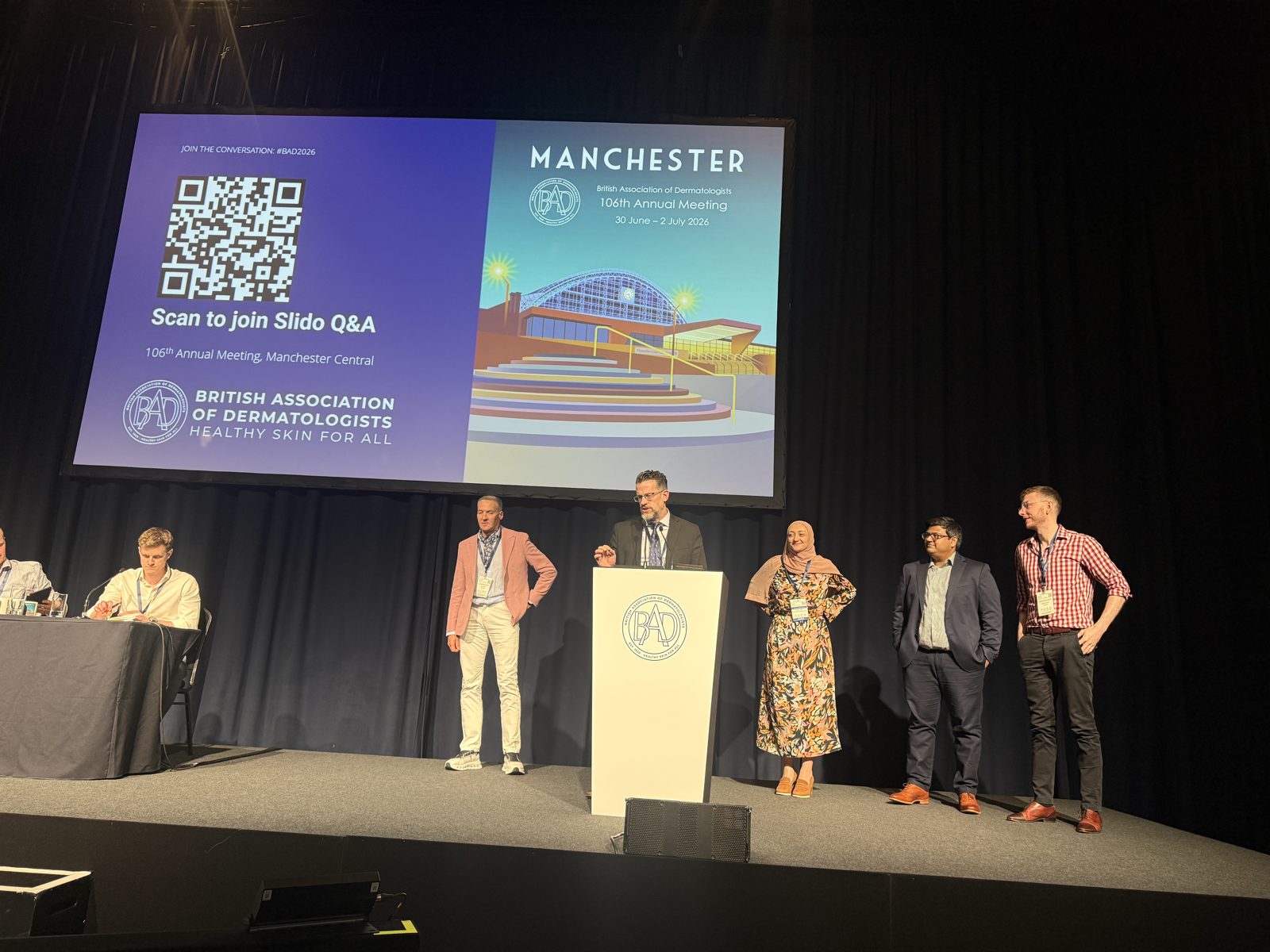
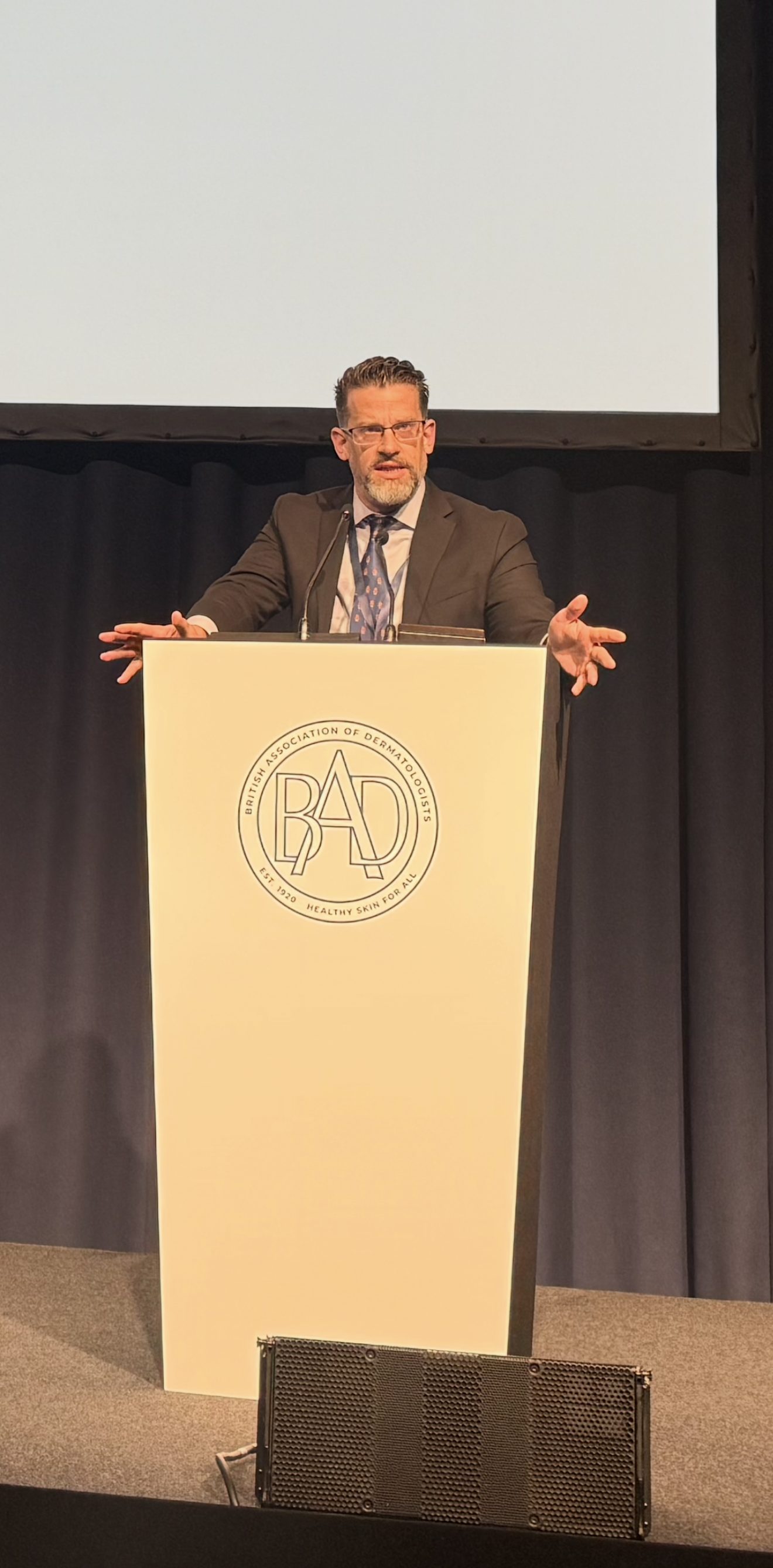
I was honored to present in the British Society for Dermatological Surgery session, where my talk, "Bilateral Bidirectional O to Z Rotation Flaps for Helical Rim Defects: A Review of 50 Cases," was allocated exactly five minutes. There is something clarifying about a strict five-minute limit: you learn precisely what matters most about your own work.
The helical rim, the curved outer edge of the ear, is one of the trickier areas to reconstruct after skin cancer surgery. The ear has little spare skin, and its shape is unforgiving; small errors are easy to see. The technique I presented uses two rotation flaps, one advancing from each direction, to close rim defects while preserving the ear's natural contour. Reviewing fifty of these cases from my own practice and distilling what I've learned into five tightly rehearsed minutes for an international audience of surgical dermatologists was a highlight of my year. The questions and conversations that followed were even better.
One of the most valuable parts of practicing medicine is stepping outside your own system long enough to see it clearly. British dermatology operates within the National Health Service, a publicly funded system that works completely differently from ours: care is free at the point of service, funded by taxation, with general practitioners guiding referrals into specialty care.
This is right up my alley. Readers of this blog know that healthcare economics is a longstanding interest of mine, and that I built Dermatology Partners around ideas about how care should be delivered in a high value, patient centered model. Spending three days talking with colleagues who practice under a fundamentally different model was informative in both directions. There is real beauty in a system where no patient ever sees a bill for their skin cancer surgery. There are also real limitations, including the waiting lists and capacity pressures that British dermatologists discuss with the same candor we discuss insurance frustrations here. No system has it all figured out. The way forward, I believe, is to study the best ideas from every model and put them to work for your own patients, and that is exactly what I try to do in Rochester.
Wherever in the world you put two Mohs surgeons at a table, they will start trading flap designs by the second cup of coffee. Meeting British colleagues who do the same work I do, under different constraints and with different tools, was a wonderful reminder that surgical judgment is a universal language.
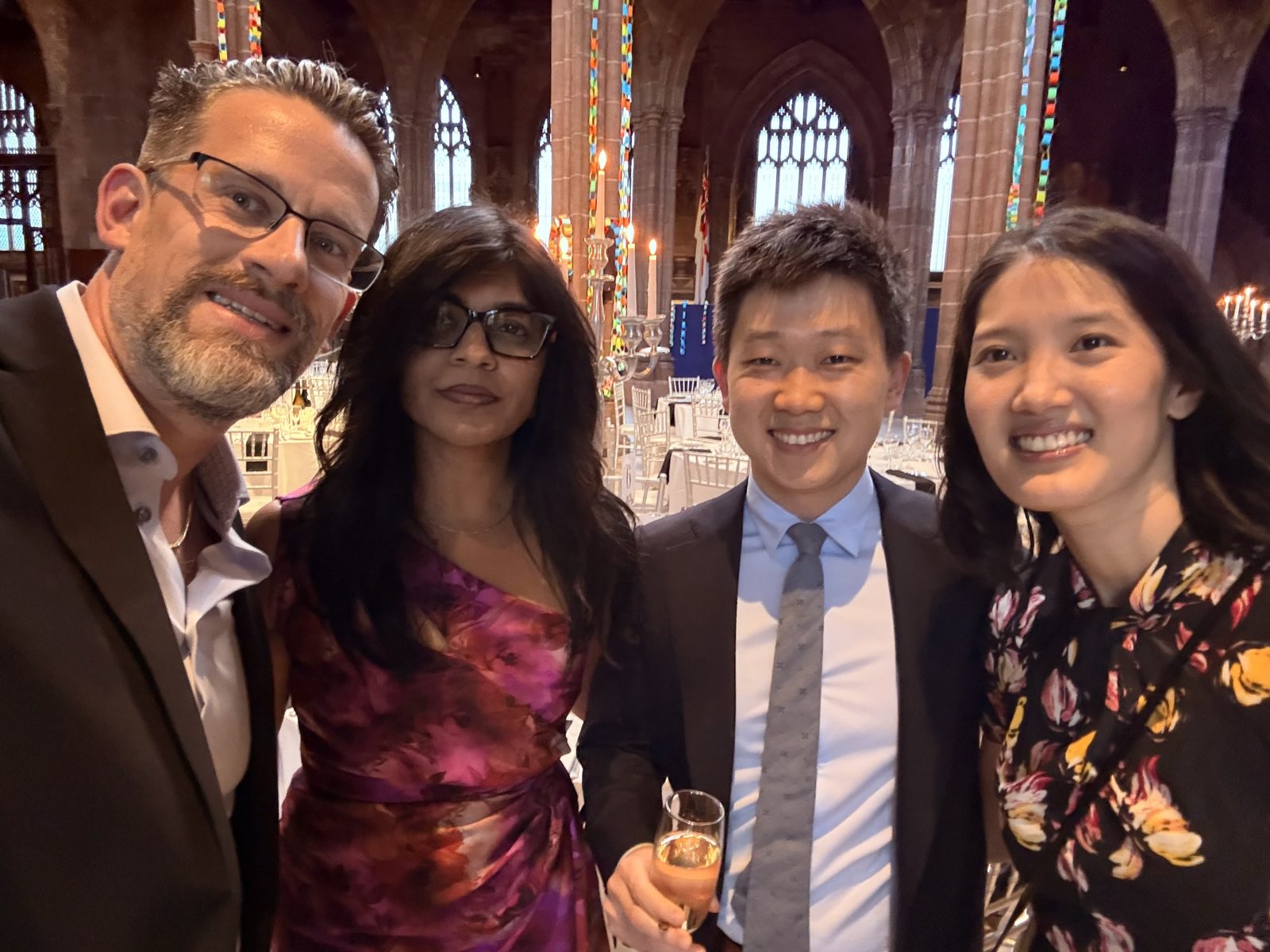
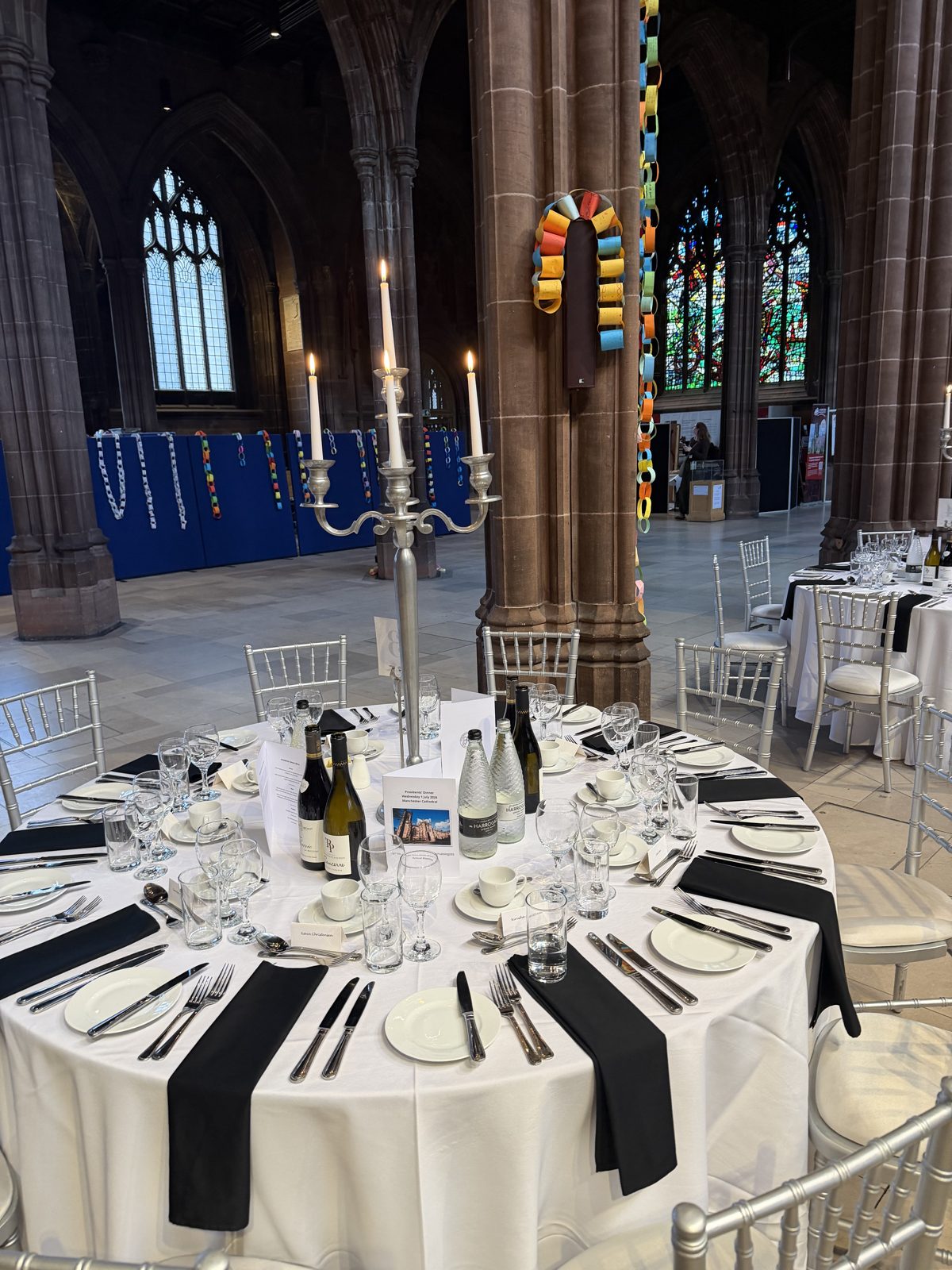
One evening stands out. The BAD Presidents' Reception was held in Manchester Cathedral, a breathtaking setting for a dinner shared with influential leaders in the National Health Service. Among them was the head of teledermatology for the NHS, and our conversation turned to the future of AI in the clinical detection of skin cancer. The NHS is actively seeking out AI models to help with the diagnostic process, using technology to help triage and evaluate skin lesions at a national scale. As someone who builds and studies AI tools in my own practice, I found the conversation fascinating: two very different systems arriving at the same questions about how technology can extend the reach of the specialist without ever replacing the specialist's judgment.
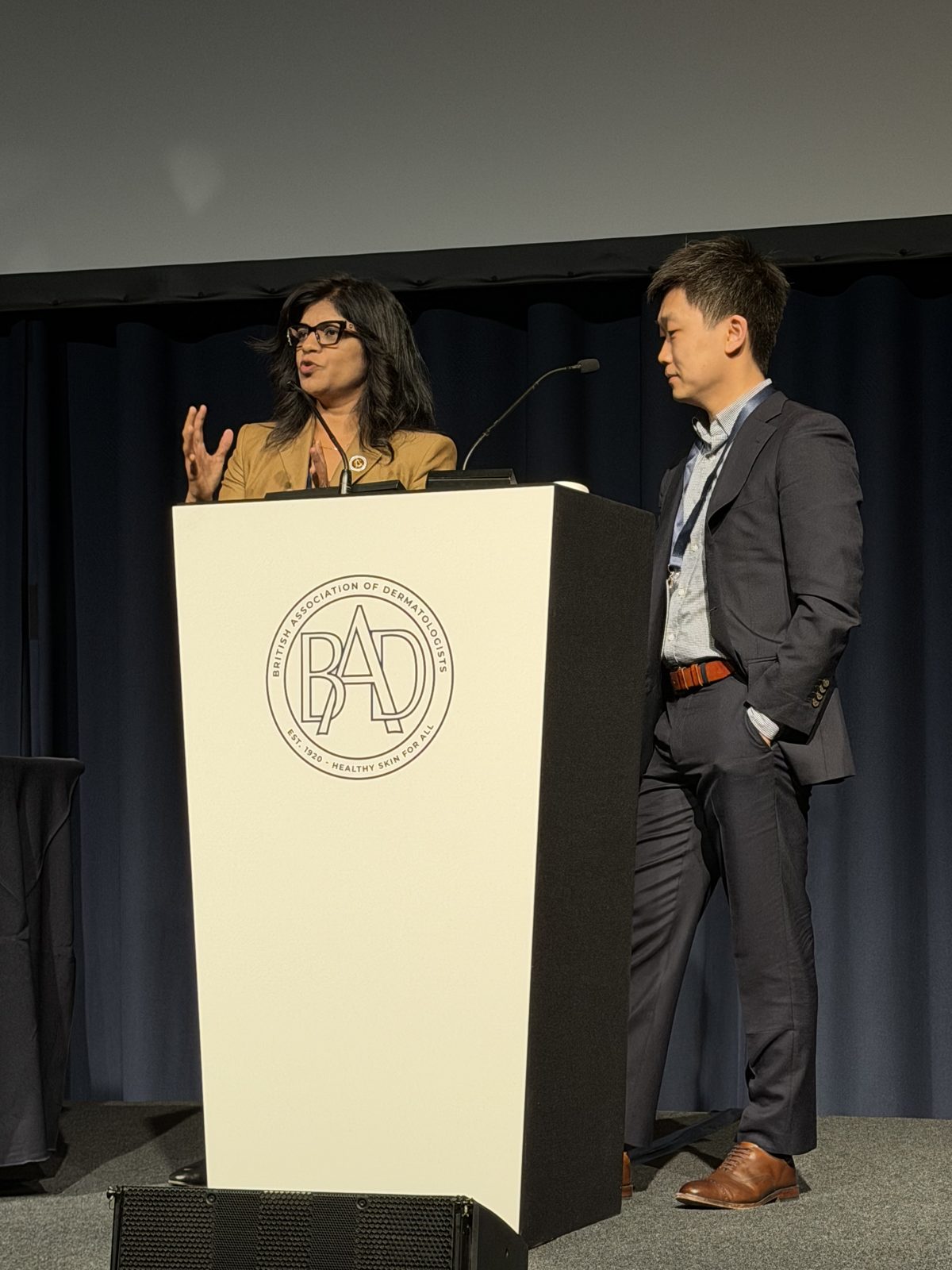
The Manchester meeting had one more echo of the AACA meeting in Rochester: my wife, Nirusha Lachman, PhD, was an invited speaker, and she delivered two talks with Dr. Jun Zhang, Mohs surgeon at the University of Pennsylvania, on relevant anatomy for Mohs surgery. Dr. Zhang and I had just served together on the faculty of the cadaveric anatomy course at the AACA meeting two weeks earlier, so watching the two of them bring that same anatomy to a British audience felt like a fitting continuation. Their talks were extremely well received, and deservedly so. When anatomists and surgeons teach together, everyone in the room benefits, and ultimately so do the patients on both sides of the Atlantic.
I flew home with a notebook full of ideas: refinements for reconstructions, a clearer view of what different healthcare models do well, developments in AI and teledermatology, and new international friendships in a specialty that is small enough for those to matter. All of it comes back to Rochester with me, into the exam room and the operating suite at Dermatology Partners.
Thank you to the British Association of Dermatologists and the British Society for Dermatological Surgery for the warm welcome. Manchester, I hope to be back.
Dr. Kevin Christensen
Looking for a fellowship-trained Mohs surgeon in Rochester, MN?
Schedule Your Appointment Call (507) 206-3211