Practice News
When I was an undergraduate at Harvard College, I took a course at the Kennedy School of Government titled Introduction to the U.S. Healthcare System. I enrolled thinking it would be useful background for a pre-med student. What I didn't expect was that it would fundamentally shape how I think about practicing medicine — and eventually lead me to build my own practice.
Ever since that course, I've been fascinated by healthcare economics.
The U.S. healthcare system is a massive ecosystem — one that was assembled piecemeal over the past century. It wasn't designed from a blueprint. Instead, it evolved through competing forces: public and private interests, legislation and market pressures, all layered on top of one another over decades.
The stakeholders are numerous and often at odds. Patients want affordable, accessible care. Physicians want to practice good medicine. Industry wants to innovate and profit. Politicians want to satisfy constituents. All of these forces operate within a free market framework, each producing solutions to the problems they see — but often creating new complications in the process.
The result is a system with rules that are complicated, sometimes contradictory, and frequently confusing. Navigating it can be daunting, whether you're a patient trying to understand your insurance benefits or a provider trying to deliver care without drowning in administrative overhead.
On the surface, it seems like healthcare should function like any other marketplace. You need a service, you find a provider, you pay for it — the same way you'd buy anything else.
But healthcare is fundamentally different, and understanding why matters.
The role of insurance changes the basic dynamics of a transaction. When a third party is paying for a service, the normal relationship between buyer, seller, and price breaks down. Patients often don't know what something costs until after they've received it. Providers spend enormous resources simply figuring out what they'll be paid.
Asymmetric information is another critical factor. A physician has years of specialized training and knowledge that a patient doesn't have. When your dermatologist recommends a biopsy, you're largely trusting their expertise — you can't independently verify that recommendation the way you might comparison-shop for a television.
Ethical obligations make healthcare unique in ways that economics alone can't capture. Physicians take an oath. We have a duty to act in our patients' best interest, regardless of what the market incentivizes. That tension — between the economics of healthcare and the ethics of medicine — is something every doctor navigates daily.
These aren't abstract concepts. They show up in real ways: in surprise medical bills, in insurance denials for treatments your doctor recommends, in the consolidation of practices into systems where efficiency is prioritized over the individual.
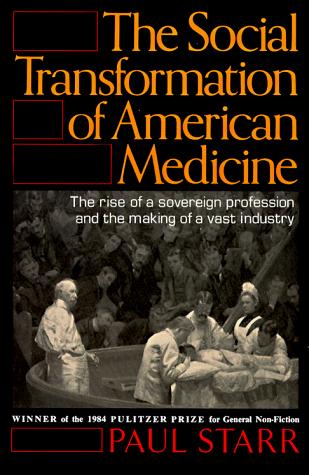
One of the most foundational books I've encountered on this topic. It chronicles the rise of modern medicine in America with remarkable detail and cutting insight — tracing how physicians went from independent practitioners to, increasingly, employees of large organizations. If you're interested in understanding how we got to where we are today, I highly recommend reading this book.
View on Amazon →One of the realities Starr's book documents — and one I see accelerating today — is the decline of the small, independent medical practice. Large healthcare systems increasingly dominate the marketplace. They have the resources to navigate the regulatory landscape, negotiate with insurers, and absorb the administrative costs that come with modern medicine.
But something is lost in that consolidation.
The independent practice goes back to the very foundation of medicine in this country: a physician providing care to patients in its most direct and purest form. No corporate intermediary. Just a doctor and the person who needs their help.
That model is becoming rarer. And I think that's a problem worth pushing back against.
One of my goals in founding Dermatology Partners was to help patients navigate this complicated system in a more convenient, transparent, and direct way — at least when it comes to their dermatologic care.
That means clear pricing so you know what things cost before you walk in the door. It means direct communication with your provider, not a phone tree. It means clinical decisions made between you and your doctor, informed by medical evidence and your individual needs — not by what an algorithm or an insurance company prefers.
I don't pretend to have all the answers to what's broken in American healthcare. But I do believe that an independent practice, built with intention and run with integrity, can offer patients something that's increasingly hard to find: care that puts them first.
That's what we're trying to do here. I'm grateful for the lessons I've learned along the way that help me practice patient-centered, high-value care.
At Dermatology Partners PLLC, we believe great care starts with a simple idea: put the patient first.
Schedule Your Appointment Call (507) 206-3211